- Free Shipping Over $75
- 60-Day Money-Back Guarantee
Shop Popular Products
Made from US-Grown Industrial Hemp
100% Clean Ingredients
Rigorously Tested, Quality Assured


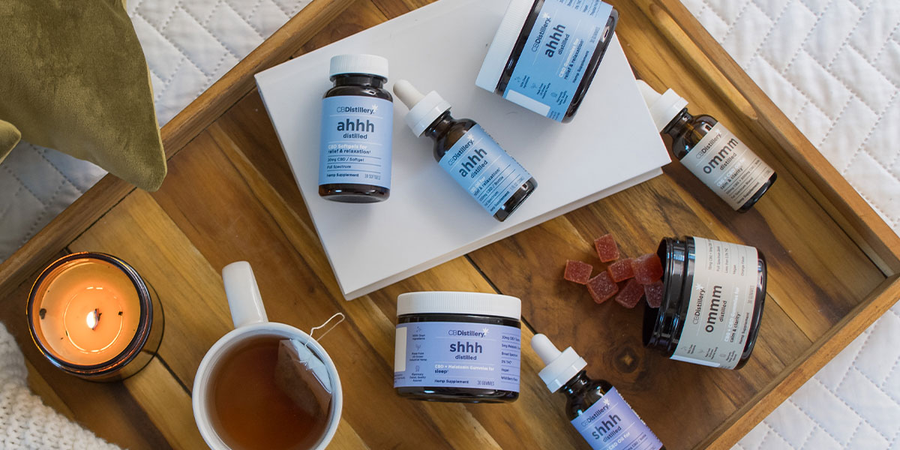
If you own or manage a CBD retail store, you may be wondering what products you should stock. CBD gummies, tinctures, capsules and topicals make up core retail inventory, with gummies leading at 58% consumer usage followed by capsules and tinctures at 55% each.1 Understanding product formats, extraction types and customer wellness needs helps retailers build profitable inventory that serves diverse shopping preferences in their CBD shop or cannabidiol store. New retailers should expect a learning curve of 60-90 days to identify which products resonate with their specific customer base.
Product format directly impacts sales performance and customer satisfaction. Retailers should prioritize formats based on consumer adoption rates and revenue potential to maximize inventory turnover, while recognizing that local demographics and customer education levels significantly influence format preferences.
CBD gummies and edibles: These lead consumer usage at 58%1, surpassing oils due to taste, convenience and discretion. Edibles (any CBD-infused food product including chocolates, gum and candies) continue driving growth across food and beverage categories. Gummies typically have a one- to two-year shelf life when stored properly, depending on packaging, making them lower-risk inventory investments. First-time CBD users gravitate toward gummies because the format feels familiar and non-intimidating.
Capsules: With 55% consumer usage1, capsules appeal to health-conscious shoppers seeking precise dosing in daily wellness routines. The pharmaceutical-style formatting resonates with customers transitioning from traditional supplements. Retailers report that capsules generate fewer dosing questions than tinctures, reducing staff training requirements.
Tinctures and CBD oil online: Tinctures tie with capsules at 55% consumer usage1. These liquid CBD extracts can be taken by adding them to a beverage or food, or by holding the oil under the tongue for faster absorption, offering versatility for customers. Tinctures require more customer education about dosing but attract customers seeking customizable servings and faster onset times than edibles.
Topicals (lotions, balms, salves and serums): Lotions come in at 53% usage1 while other topicals are used by 42% of CBD consumers1. These products target localized relief and are growing rapidly in skincare categories. Topicals appeal to customers hesitant about internal consumption and those seeking targeted application for specific areas. Store topicals away from direct sunlight to maintain product integrity.
|
Product Type |
Consumer Usage Rate1 |
Key Retail Advantage |
Best Customer Profile |
Typical Shelf Life |
|
Gummies |
58% |
Easy dosing, broad appeal |
First-time users, daily wellness seekers |
12-24 months |
|
Capsules |
55% |
Wellness familiarity |
Health-conscious, routine-oriented |
18-24 months |
|
Tinctures |
55% |
Versatile, fast-acting |
Experienced consumers, customization seekers |
12-18 months |
|
Topicals |
42-53% |
Localized application |
Consumers seeking localized relief, skincare focused |
12-18 months |
Diversifying across multiple formats maximizes appeal to different shopping preferences and use cases. Retailers should start with 2-3 formats and expand based on actual customer requests rather than stocking every available format immediately.
The type of CBD extract used in CBD products affects both legal compliance and customer appeal, making this difference critical knowledge for anyone stocking an online CBD site or physical store. Staff should understand these distinctions and be able to answer customer questions confidently to reduce return rates.
Full spectrum CBD: Extracts containing all naturally occurring cannabinoids, including trace amounts of THC up to the 0.3% federal limit, terpenes and flavonoids. The "entourage effect," the theory that compounds work synergistically for enhanced benefits, appeals to experienced users seeking maximum plant benefits. This format may concern customers seeking to avoid THC, so it’s important to be transparent about the amounts of THC present in full spectrum formulas. Some customers report fuller effects from full spectrum products, though individual responses vary.
Broad spectrum CBD: Extracts with multiple cannabinoids and terpenes but with additional processing to remove THC (though trace amounts up to 0.01% may remain). Broad spectrum products offer the synergy of CBD and minor cannabinoids with terpenes and flavonoids without the concern of THC, making it a versatile option for retail and popular option for customers avoiding THC.
CBD isolate: Pure CBD with all other molecules removed. CBD Isolate products provide predictable dosing that is THC-free, ideal for first-time users or those seeking to avoid even trace amounts of THC. Isolate lacks entourage effects but offers the most straightforward product claims and typically the lowest production costs. Customers appreciate isolate's neutral flavor in tinctures and its suitability for those with sensitivity to other cannabinoids.
|
Extraction Type |
THC Content |
Compound Profile |
Best For |
Customer Considerations |
|
Full Spectrum |
Up to 0.3% |
All cannabinoids, terpenes, flavonoids |
Experienced users seeking maximum benefits |
May trigger drug tests with regular use |
|
Broad Spectrum |
Up to 0.01% |
Multiple cannabinoids and terpenes without THC |
Mainstream retail, THC-sensitive customers |
Balanced benefits without THC concerns |
|
Isolate |
0% |
Pure CBD |
First-time users, strict THC restrictions |
Most affordable, predictable effects |
Most successful retailers carry products from at least two extraction categories to accommodate different customer needs and comfort levels.
Product quality directly impacts customer trust, repeat purchases, and your store's reputation. Vetting suppliers protects both your business and customers while reducing liability exposure from substandard products.
Check third party lab reports: Request Certificates of Analysis (COAs) from independent laboratories, not in-house testing. A COA is a document verifying the presence and amount of different cannabinoids as well as checking for a large variety of contaminants. Look for cannabinoid potency within 100-120% of the label claim, THC content at or below 0.3% for legal compliance, absence of heavy metals (lead, arsenic, mercury) and pesticides, and testing dates within the last six to nine months. Batch-specific COAs are preferable to generic certificates. Reputable suppliers provide COA access through QR codes on packaging or readily available links on their websites.
Review hemp source and growing practices: Hemp absorbs compounds from soil, making information about the source helpful for gauging product purity. This "bioaccumulation" means hemp grown in contaminated soil will contain those contaminants in the final product. Prioritize US-grown hemp with disclosed farm locations, organic or pesticide-free cultivation practices, and suppliers who specify extraction methods. CO2 extraction remains the industry gold standard for producing clean extracts without residual solvents, though ethanol extraction is also acceptable when properly executed. Domestic sourcing reduces supply chain disruptions and appeals to customers seeking locally-produced products.
Evaluate brand reputation and certifications: Research the supplier’s track records through verified customer reviews on third-party platforms (not just supplier websites) and look for industry certifications like Good Manufacturing Practices (GMP). Also consider the transparency and availability of information from the supplier about ingredient sourcing and formulation processes, the responsiveness of the supplier’s customer service support, and whether the company offers clear return policies. Contact potential suppliers directly with questions; their responsiveness and knowledge level indicate the support you'll receive as a retailer. Request samples before committing to large inventory purchases. Building relationships with 2-3 reliable suppliers provides backup options if one experiences supply issues.
Customer wellness goals should drive product selection, as shoppers increasingly seek targeted results rather than general CBD products. Listening to customer questions and tracking which products (or benefits) customers ask about most frequently provides valuable insight for inventory decisions.
Relaxation and stress management: This was the most commonly-cited reason consumers reported using CBD in a 2024 Forbes Health survey.1 For these customers, stock moderate-potency tinctures (500–1000mg CBD per bottle) and daytime gummies that blend CBD with cannabinoids like CBG, shown in a 2022 CBDistillery study to help reduce mild or temporary anxiety while increasing focus and metal clarity. Broad spectrum products appeal to this segment for workday use without THC concerns.
Physical relief: These customers seek higher potency products and localized application options. Stock full spectrum tinctures (1000mg CBD or more), high-strength topicals (500mg CBD or more per container), capsules for consistent daily dosing, and balms for targeted application. These customers often conduct extensive research before purchasing and values staff who can answer detailed questions. They may start with topicals before trying internal products, so cross-merchandising both formats together increases conversion.
Sleep support: Sleep-focused customers often prefer products combining CBD with complementary cannabinoids or botanicals. Stock gummies or tinctures containing CBD and CBN, evening-specific formulations with melatonin or chamomile, and higher potency options (30–50mg CBD per serving). CBN (cannabinol) is a cannabinoid that has been found to promote quality sleep, though research is still emerging. Set realistic expectations that CBD affects individuals differently and may require experimentation with timing and dosing to find what works.
General wellness and prevention: These customers use CBD proactively for overall health maintenance rather than addressing specific conditions. Stock lower-to-moderate potency products (300-750mg CBD per bottle), capsules for daily routines, and flavorless tinctures for versatility. These customers appreciate straightforward options without complex formulations and often become loyal repeat purchasers once they find products they trust.
Minor cannabinoids and specialized formulations represent high-growth opportunities, with consumers willing to pay more for targeted effects beyond standard CBD. These categories also differentiate your store from mass-market retailers focused solely on basic CBD products.
CBN for sleep-focused shoppers: CBN (cannabinol) is one of more than 100 identified minor cannabinoids and has been shown to help promote healthy sleep. CBN products are experiencing rapid growth in the sleep category, though scientific research into CBN is less extensive than research into CBD. Stock CBD+CBN combination gummies (a typical ratio is 5:1 or 3:1 CBD to CBN), CBN tinctures for nighttime use, and sleep-specific formulations combining CBN with melatonin. Customers should understand that CBN research is still developing and individual responses may vary. This category attracts customers who have tried CBD alone without sufficient sleep benefits.
CBG for energy and focus: CBG (cannabigerol) is known as the "mother cannabinoids" because it is the precursor molecule from which all other cannabinoids are created. In a 2022 CBDistillery study, participants reported a significant difference in the reduction of mild or temporary anxiety when using a blend of CBD and CBG, along with increased focus and mental clarity. Stock morning or daytime CBD+CBG gummies, CBG tinctures marketed for productivity and mental clarity, and combination products pairing CBG with energizing terpenes. These products often appeal to professionals seeking daytime wellness support without drowsiness.
Pet-friendly CBD for animal wellness: Pet CBD represents a growing market segment with pet owners seeking natural options for relief and to ease temporary separation anxiety. Stock pet-specific tinctures with lower potency (125-300mg CBD per bottle for small animals, 500-1000mg CBD for large dogs) and pet-safe flavorings, soft chews or treats sized appropriately for different animal weights, and topical balms for localized pet relief. Pet-specific formulations are necessary rather than recommending human products, as animals metabolize cannabinoids differently and require different concentrations. Pet owners often become highly loyal customers and recommend products within pet owner communities. Provide serving size guidance based on pet weight and advise consultation with veterinarians, particularly for animals on other medications.
Successful CBD retail combines understanding customer needs, prioritizing quality suppliers, and offering diverse product formats and formulations while remaining responsive to local market preferences.
Start with core inventory: prioritize broad spectrum hemp-derived gummies, tinctures, capsules, and topicals for broad appeal and THC-free compliance. Stock multiple potency levels within each format to serve beginners (300-500mg CBD total per container) through experienced users (5000mg+ CBD per container). Include targeted formulations addressing specific needs, with sleep products typically outselling other specialized categories. Expand into minor cannabinoids (CBN, CBG) and pet products once basic CBD inventory is established, typically after 3-6 months of tracking customer requests.
Maintain transparent quality standards with accessible lab testing and US-sourced hemp. Display COA access information prominently and train staff to locate and interpret certificates when customers ask. Regular supplier communication helps you stay informed about industry changes and product availability.
Making wholesale relationships with quality suppliers is necessary for healthy profit margins. Wholesale partnerships with established brands reduce your liability by leveraging their testing infrastructure and regulatory compliance expertise. While major pharmacy chains like CVS and Walgreens have expanded into CBD retail, independent retailers should understand what makes pharmacy CBD different and why direct relationships with transparent manufacturers often better serve customer needs through specialized selection and knowledgeable service.
Retailers seeking reliable partners can explore lab-tested, US-grown hemp CBD products from CBDistillery, offering transparent sourcing and diverse product formats to meet varied customer needs. Informed product selection transforms CBD from a trend into a sustainable, trust-building category that serves customers' genuine wellness goals while building profitable retail business. Expect to refine your product mix continuously based on customer feedback, seasonal trends, and emerging research about cannabinoid applications.
Sources
1. Hall, A. (2024, Apr. 29). CBD Statistics, Data and Use. Forbes. https://www.forbes.com/health/cbd/cbd-statistics/
