- Free Shipping Over $75
- 60-Day Money-Back Guarantee
Shop Popular Products
Made from US-Grown Industrial Hemp
100% Clean Ingredients
Rigorously Tested, Quality Assured


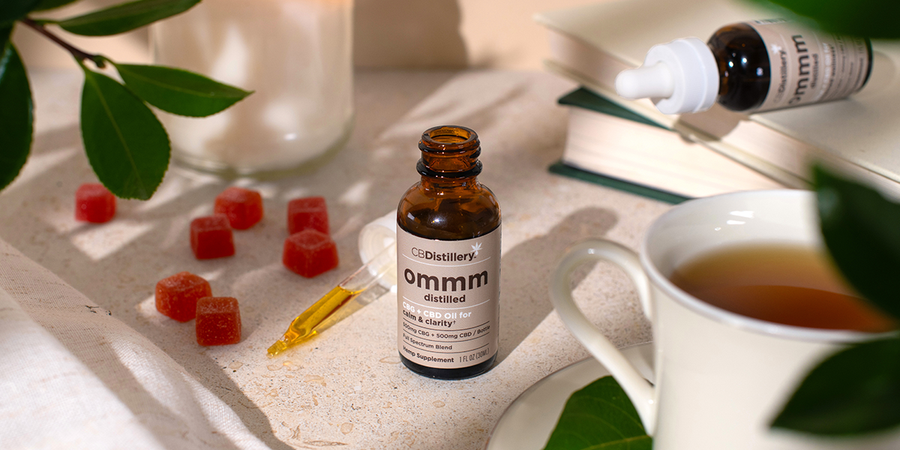

CBD may be one of the most well-known cannabinoids extracted from the hemp plant, but it’s far from the only one. There is growing interest (and research) into other minor cannabinoids found in the hemp plant, including CBG.
While both CBD and CBG are known for having considerable health and wellness potential, they do work in different ways.
Both CBG (cannabigerol) and CBD (cannabidiol) are naturally-occurring cannabinoids found in hemp plants. Unlike THC, neither compound is considered intoxicating, meaning they do not produce the euphoric "high" commonly associated with marijuana.
However, CBG and CBD have slightly different origins within the hemp plant itself. CBG is often called the "mother of all cannabinoids" because its acidic precursor, cannabigerolic acid (CBGA), serves as the starting material from which other major cannabinoids develop during plant growth. As cannabis plants mature, enzymes convert CBGA into the acidic forms of CBD, THC, and several other cannabinoids.
Both CBD and CBG interact with the body’s endocannabinoid system, the network of receptors and messengers that regulate bodily processes like mood, sleep, immune function, pain and inflammation after physical activity, and more. While researchers are still learning exactly how cannabinoids influence this system, evidence suggests that both CBD and CBG affect multiple biological pathways throughout the body.
Key differences between CBG and CBD include:
|
Property |
CBG |
CBD |
|
Full Name |
Cannabigerol |
Cannabidiol |
|
Intoxicating? |
No |
No |
|
Role in Plant |
Precursor cannabinoid |
CBGA is converted to CBDA and then CBD through decarboxylation |
|
Natural Abundance |
Relatively low |
High |
|
Availability |
Less common |
Widely available |
|
Research Volume |
Limited but growing |
Extensive compared to other cannabinoids |
|
Common Wellness Uses |
Focus, mental clarity, reducing stress and mild anxiety* |
Relaxation, sleep support, relief, recovery |
*According to participants in a 2022 CBDistillery study on mild and temporary anxiety
To understand the differences between CBG and CBD, it helps to understand the endocannabinoid system.
The endocannabinoid system is a network of receptors and messengers that regulate many bodily processes, including mild stress, pain and inflammation after physical activity, memory, mood, immune function and more. Your body makes these messengers as needed, and they are quickly broken down by enzymes. When your body doesn’t product enough messengers on its own, the communication system regulating these bodily processes can fail.
The two main types of receptors in your ECS are the CB1 and CB2 receptors. CB1 receptors are concentrated primarily in the brain and central nervous system, influencing functions like mood, memory and pain perception, while CB2 receptors are found predominantly in the peripheral nervous system and regulate functions like muscle movement, organ function and immune system processes.1
While THC binds to CB1 receptors, creating the psychoactive effects associated with THC, CBD appears to influence receptor signaling through indirect mechanisms. Preliminary research into CBG shows that it also appears to have an indirect effect on CB2 receptors, with minimal activation of CB1 receptors.2
Key Receptor Interactions
These differences may help explain why consumers often report different experiences with each cannabinoid. However, more controlled human research is needed before firm conclusions can be drawn about comparative effects.
Although both cannabinoids are non-intoxicating, many people report experiencing different effects from CBG than from CBD.
CBD has been studied more extensively than many other cannabinoids and is commonly used for relaxation, stress management, sleep support and general wellness. CBG has shown the potential to help manage stress without drowsiness; in fact, a 2022 CBDistillery on mild and temporary anxiety found that CBG helped reduce mild or temporary anxiety while increasing focus and mental clarity. However, CBG remains less studied than CBD and there is likely more to learn about this cannabinoid.
CBG vs CBD Benefits Comparison
|
Potential Area |
CBD |
CBG |
|
Relaxation Support |
Common consumer use |
Common consumer use |
|
Sleep Support |
Frequently used for this purpose |
Limited evidence |
|
Stress Management |
Common consumer use |
Common consumer use |
|
General Wellness |
Widely used |
Increasingly popular |
|
Focus and Alertness |
Anecdotal reports vary |
Frequently reported by consumers |
|
Inflammation Research |
Active area of study |
Active area of study |
|
Neuroprotection Research |
Investigated in multiple models |
Investigated in multiple models |
CBD Benefits
Research on CBD is substantially more advanced than research on CBG. CBD has been studied for its ability to support relaxation and stress management, sleep, relief of mild discomfort and general wellness without causing intoxication. In a November 2019 CBDistillery customer survey, customers reported experiencing better sleep, more relaxation, less discomfort, less stiffness, and less inflammation after physical exercise within 7-14 days of starting daily CBD use.
While many consumers use CBD for everyday wellness, researchers continue to investigate its effects across a broad range of health conditions.
CBG Benefits
CBG remains less researched than CBD, but scientists are exploring several potential benefits of CBG, by itself and working synergistically with other cannabinoids.
In a 2022 CBDistillery study, participants taking a tincture with CBG reported a significant difference in the reduction of mild/temporary anxiety, as well as increased focus and attitude. Study participants also reported that the tincture was significantly more efficacious at managing mild/temporary anxiety than other activities, and that it was more effective than other treatments they had tried in the past year.
When considering adding CBD versus CBG to your routine, it’s important to match the cannabinoid to your goals while also understanding the current evidence. CBD has a longer track record and significantly more clinical research than CBG. CBG is an emerging cannabinoid with intriguing potential, but many of its commonly discussed benefits remain under investigation.
Current State of Scientific Research
CBD:
CBG:
Choosing between CBG and CBD often comes down to the specific outcome you're looking for. While both cannabinoids are non-intoxicating and interact with the body's endocannabinoid system, the available evidence and consumer experiences suggest they may be better suited for different situations.
It's important to note that much of the discussion around CBG remains based on early research and user reports rather than large-scale clinical trials. CBD, by comparison, has been studied far more extensively.
Supporting Relaxation and Sleep Quality
CBD is generally the more popular choice for individuals seeking calm and sleep support. Researchers have explored CBD's interactions with several biological pathways involved in mood and sleep regulation. While the evidence is still evolving, some studies have shown that CBD may hold promise for improving sleep3 and for REM sleep behavior disorder.4
Many consumers choose CBD in the evening because it is often associated with a calming experience without intoxication. Common product formats include CBD oils, gummies, and capsules, each offering different advantages depending on personal preference and desired onset time.
CBD oils provide flexible serving sizes and relatively quick absorption. Gummies offer convenience and consistent serving sizes. Capsules may appeal to those who want the convenience of gummies without sugar.
While many consumers report positive experiences using CBG for reducing stress, current evidence does not support concluding that CBG is superior to CBD for sleep.
Enhancing Focus and Reducing Stress
CBG is, however, frequently marketed as a cannabinoid for focus and daytime wellness. In a 2022 CBDistillery study, participants taking a tincture with CBG reported a reduction in mild or temporary anxiety and in tension, and an increase in focus and mental clarity. Many users find that this combination of reducing stress and mild/temporary anxiety while increasing focus and mental clarity makes CBG products ideal for daytime.
Managing Discomfort and Inflammation
Both CBD and CBG are being investigated for their potential roles in inflammation and discomfort management.
CBD has been studied more extensively in this area and is commonly used as part of general wellness routines that support recovery and everyday comfort. In a 2019 CBDistillery customer survey, 88% of participants reported preferring CBD to turmeric for inflammation after physical activity, and reducing inflammation from physical activity was one of the most commonly reported benefits from people who took CBD daily for 7-14 days. While there is much less research into CBG on this topic, it is an area scientists are exploring.
The Entourage Effect: Combining CBG and CBD
One reason many consumers choose products that contain multiple cannabinoids is the entourage effect. The entourage effect refers to the theory that cannabinoids, terpenes, and other compounds found in the cannabis plant have a greater effect when working together than the sum of their individual effects.
The entourage effect is one reason some people look for full spectrum hemp products, or products that contain all naturally-occurring cannabinoids, terpenes, flavonoids and other compounds from the hemp plant. These products contain small amounts of THC (less than 0.3% in accordance with federal regulations).
Other people prefer broad spectrum or isolate products due to personal preferences or local regulations. Broad spectrum products undergo additional processing to ensure THC levels are non-detectable (less than 0.01%), while retaining other minor cannabinoids, terpenes and plan compounds. CBD isolate undergoes further processing than broad spectrum CBD to remove all other molecules, leaving only pure CBD (CBG isolate undergoes similar processing to leave only pure CBG).
CBG can be found in full spectrum products, which combine the cannabinoid with CBD and trace amounts of THC, and in CBG isolate products which are made with only pure CBG.
Selecting the right cannabinoid is only part of the equation. Product format, potency and formulation can also influence your experience.
Common Product Types
|
Product Type |
Best For |
Considerations |
|
Oils and Tinctures |
Flexible serving sizes and customizable use |
Faster absorption than many ingested products |
|
Gummies |
Convenience and consistent servings |
Longer onset time |
|
Capsules and Softgels |
Daily supplementation without sugar |
Easy to incorporate into routines |
|
Full Spectrum Products |
Consumers seeking multiple cannabinoids |
May contain small amounts of THC (less than 0.3%) |
|
Broad Spectrum Products |
Multiple cannabinoids without detectable THC (less than 0.01%) |
Many be more available in states with strict regulations |
|
Isolates |
Single-cannabinoid formulations or states the with strictest regulations |
No entourage effect from other cannabinoids |
Key Considerations When Selecting Products
CBDistillery is one example of a company that emphasizes third-party testing and transparent Certificates of Analysis, allowing consumers to verify cannabinoid content and product quality before purchase.
Whether you're exploring CBD, CBG, or a combination of both, consistency is often more important than taking large amounts at once. Many beginners start with a modest serving size and gradually adjust based on their experience. Keeping a simple journal can help track factors such as serving size, timing and perceived effects.
For individuals primarily interested in calming relaxation, sleep quality or sleep duration, CBD is often the first cannabinoid they explore because it has the strongest body of supporting research. For those curious about daytime wellness, focus and stress reduction, CBG may be worth considering as part of a carefully monitored routine.
Timing can also matter. Some people prefer CBD in the evening as part of post-work relaxation or bedtime sleep routines. Others prefer CBG in the morning or during the day due to its ability to increase focus and mental clarity, according to a 2022 CBDistillery study of mild/temporary anxiety. Personal experimentation remains important because cannabinoid responses can vary from person to person.
Consistency is another factor worth considering. In a November 2019 CBDistillery customer survey, daily CBD users reported finding CBD more effective and feeling the effects of CBD sooner than people who only took CBD as needed.
When shopping for cannabinoid products, prioritize transparency, quality ingredients and independent testing. CBDistillery's range of CBD and CBG oils, gummies, capsules and topicals provides consumers with multiple options backed by third-party testing and quality assurance standards.
As research continues to evolve, consumers will likely gain a clearer understanding of where CBG fits alongside CBD. Until then, the best approach is to stay informed and pay attention to how your body responds. The most effective cannabinoid routine is often the one tailored to your unique goals, preferences, and lifestyle.
What is the main difference between THC vs CBD vs CBG?
THC is intoxicating and has significant activity at CB1 receptors in the central nervous system, which contributes to the "high" associated with marijuana. CBD and CBG are non-intoxicating and interact with the endocannabinoid system more indirectly, as well as reacting with receptors outside the ECS.
How long does it take to feel the effects of CBG compared to CBD?
The onset time depends primarily on the product format rather than the cannabinoid itself. Oils are typically absorbed faster than ingested formats like gummies or softgel capsules.
Can I take CBG and CBD together?
Many consumers combine CBG and CBD to better experience the entourage effect, or the idea that different cannabinoids and other compounds in hemp have a greater effect together than the sum of their individual effects.
Resources:
1. Tsuboi K, Uyama T, Okamoto Y, Ueda N. Endocannabinoids and related N-acylethanolamines: biological activities and metabolism. Inflamm Regen. 2018 Oct 1;38:28. doi: 10.1186/s41232-018-0086-5. PMID: 30288203; PMCID: PMC6166290.
2. Li S, Li W, Malhi NK, Huang J, Li Q, Zhou Z, Wang R, Peng J, Yin T, Wang H. Cannabigerol (CBG): A Comprehensive Review of Its Molecular Mechanisms and Therapeutic Potential. Molecules. 2024 Nov 20;29(22):5471. doi: 10.3390/molecules29225471. PMID: 39598860; PMCID: PMC11597810.
3. Vaillancourt R, Gallagher S, Cameron JD, Dhalla R. Cannabis use in patients with insomnia and sleep disorders: Retrospective chart review. Can Pharm J (Ott). 2022 Apr 15;155(3):175-180. doi: 10.1177/17151635221089617. PMID: 35519083; PMCID: PMC9067069.
4. Babson KA, Sottile J, Morabito D. Cannabis, Cannabinoids, and Sleep: a Review of the Literature. Curr Psychiatry Rep. 2017 Apr;19(4):23. doi: 10.1007/s11920-017-0775-9. PMID: 28349316.