- Free Shipping Over $75
- 60-Day Money-Back Guarantee
Shop Popular Products
Made from US-Grown Industrial Hemp
100% Clean Ingredients
Rigorously Tested, Quality Assured


If you’ve found yourself wondering just what CBD is, what CBD’s effects are, or how CBD differs from THC, you’re not alone. CBD has become one of the most-discussed wellness compounds in the U.S. But with so much to discover about the cannabinoid, many people have questions about CBD. So what is CBD, what does CBD do, and what does science say about CBD? Let’s dive in.
CBD stands for cannabidiol, one of more than 100 naturally-occurring compounds found in the cannabis plant. CBD can be found in both hemp and marijuana plants; hemp contains more CBD by weight than it does THC, while marijuana contains more THC than CBD.
When it comes to CBD versus THC, the key difference is psychoactivity. THC, or tetrahydrocannabinol, produces the “high” commonly associated with marijuana use. CBD, on the other hand, is non-psychoactive, meaning it does not produce a high sensation.
Here’s a side-by-side comparison:
|
Feature |
CBD (Cannabidiol) |
THC (Tetrahydrocannabinol) |
|
Psychoactive effects |
Non-intoxicating |
Produces a "high" |
|
Legal status (federal) |
Federally legal if from hemp (<0.3% THC) |
Federally legal if derived from hemp and no more than 0.3% by dry weight, otherwise illegal |
|
Medical applications |
Various wellness applications |
Various medical uses |
|
Source |
Hemp and marijuana |
Hemp (if no more than 0.3% by dry weight) or marijuana |
The legal status of cannabidiol (CBD) depends on the exact state in question, and sometimes varies depending on the product. The Agriculture Improvement Act of 2018, commonly called the 2018 Farm Bill, removed hemp and hemp-derived products from the federal Controlled Substances Act and defined hemp as containing no more than 0.3 percent THC by dry weight. This THC limit applies to both the hemp plants from which CBD is derived and the finished products made with CBD. However, some state legislatures have passed additional restrictions or regulations that may affect what types of CBD can be sold in your state or what types of businesses can sell them.
Cannabidiol and products like CBD oil can have a variety of physical effects. In a 2019 CBDistillery customer survey, 1,900 respondents reported experiencing better sleep, more relaxation, less discomfort and stiffness, and less inflammation after physical activity with daily CBD use.
Your body manufacturers the messengers for your ECS as needed, and they are broken down quickly by enzymes. When your body cannot product enough of these messengers, or neurotransmitters, on its own, the communication system can fail.
CBD works by mimicking the messengers and influencing the receptors of the endocannabinoid system. By supporting the functions of this regulatory system, CBD has the potential to provide numerous health and wellness benefits.
Terminology: Cannabidiol Vs CBD
If you’ve searched for “cannabidiol vs cbd” or “what does cbd mean,” the answer is simple: cannabidiol and CBD are the same compound. CBD is just the abbreviation.
CBD and THC are both cannabinoids, or naturally-occurring compounds found in cannabis plants. Hemp and marijuana both belong to the Cannabis sativa plant species, but are differentiated by their levels of CBD and THC. Hemp plants contain higher levels of CBD and no more than 0.3% THC, while marijuana plants contain more than 0.3% THC and typically lower levels of CBD. While there are more than 100 identified cannabinoids, CBD and THC are some of the more commonly mentioned cannabinoids.
First and foremost, you should always check with your healthcare provider before trying cannabidiol oil or other CBD products. Many people report experiencing no side effects from CBD; in a 2019 CBDistillery blind survey, 93% of respondents reported never experiencing a negative side effect with CBD. However, everyone’s body and health needs are unique, and there are some medications that can interact with CBD, so its important to check with a healthcare provider who knows your specific health needs. You can also find support and education around CBD dosing, side effects and more from the knowledgeable care team at Realm of Caring.
CBD is available in many different product formats, each with their own advantages. The right one for you will depend on your lifestyle, your preferences and what you are hoping to get from your CBD products.
1. Oils And Tinctures
Cannabidiol oil is often taken by holding the oil under the tongue before swallowing. This method allows the cannabinoids to be absorbed into your bloodstream through the large veins beneath your tongue, a faster and more efficient method (some people report feeling effects in as little as 15-20 minutes). CBD oil tinctures can also be added to a food item or beverage, and many people choose CBD oils because they allow for flexible serving sizes.
2. Edibles, Gummies And Capsules
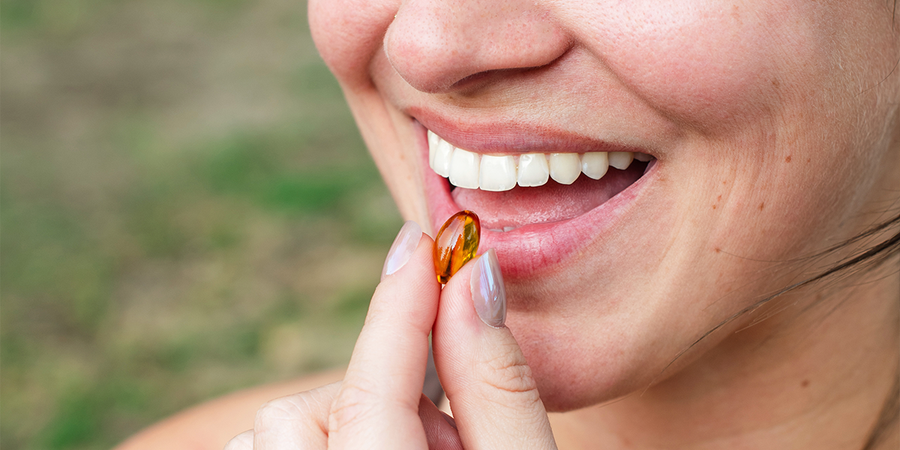
Ingesting CBD in a gummy, softgel capsule or other edible form means the CBD and other cannabinoids are processed through the digestive system. Many people report feeling the effects of ingested CBD one to two hours after consuming the CBD product. Edible forms of CBD also provide consistent and precise serving sizes, with no need to measure.
3. Topicals And Balms
Topical CBD products are applied directly to the skin. They offer localized, targeted relief as well as nourishment for distressed skin.
Side Effects
Although most CBD users report having never experienced a negative side effect, side effects are possible. In several studies on the topic, the most commonly-reported side effects of CBD were found to be sedation, drowsiness, diarrhea and change in appetite.1,2 This is one of the reasons we suggest starting low and going slow; finding the lowest efficacious serving size reduces your chances of experiencing side effects. It can also help to start low and go slow; starting with a low serving and gradually increasing until you find the smallest efficacious serving size can also lower your risk of experiencing side effects.
Potential Drug Interactions
It is possible for CBD to interact with or affect other medications. Research on the topic is limited, especially research looking specifically at hemp-derived CBD products. However, we do know that the CYP3A4 enzyme, a liver enzyme which helps metabolize CBD, is inhibited or induced by certain prescription drugs. When CBD is taken with those prescription drugs, this can change the way your body metabolizes CBD.2 CBD can also inhibit the CYP2D6 and CYP2C9 enzymes, which can affect the way some medications – including omeprazole (Prilosec), warfarin (Coumadin) and the NSAID diclofenac (Voltaren) – are metabolized in your body.6 If you are considering starting CBD, it’s important to discuss it with a healthcare provider who knows your specific situation and any prescriptions or supplements that you are taking to make sure any potential interactions can be identified and addressed.
Who Should Avoid CBD
The FDA advises against consuming CBD products while pregnant or breastfeeding, noting that there is no comprehensive research studying the effects of CBD on the developing fetus, pregnant mother, or breastfed baby.3Anyone who has been advised by a doctor not to take CBD due to a medical condition, potential drug interaction or other reason should also avoid CBD.
If you’re exploring what CBD is for the first time, the sheer amount of information available can feel overwhelming. Here are the most important things to know:
CBD is a naturally-occurring plant compound found in hemp with numerous potential wellness benefits. Unlike THC, CBD is non-psychoactive, or non-intoxicating.
Before starting CBD, you should consult with a healthcare provider who knows your health needs, history and medications. Remember to start low and go slow!
Quality matters. If you’re new to CBD, look for a brand that contracts for independent, third-party testing of all its products and that makes those test results easy to access. Third-party lab testing ensures that what is in your products matches what is on the label, without the presence of contaminants. Look for a company like CBDistillery that tests each individual batch of products (instead of re-using old lab tests) and posts those test results online.
Where does CBD come from?
CBD comes primarily from hemp plants cultivated to contain high levels of cannabidiol (CBD) and less than 0.3 percent THC, as defined by federal law under the 2018 Farm Bill.
What is cannabidiol used for?
People use cannabidiol, or CBD, for a variety of health and wellness benefits. In a November 2019 CBDistillery customer survey, daily CBD users reported experiencing better sleep, more relaxation, less discomfort and stiffness and less inflammation after physical activity.
Is hemp cannabidiol the same as marijuana CBD?
Cannabidiol, or CBD, is a naturally-occurring plant compound found in both the hemp and marijuana plants, which are both different types of cannabis plants. Hemp plants contain more CBD than THC (another plant compound, this one intoxicating), while marijuana plants contain more THC than CBD. While the actual CBD compound is the same, the source of the CBD makes a difference in the product’s legality; hemp-derived CBD products are federally-legal after the passage of the 2018 Farm Bill, while marijuana-derived CBD remains federally illegal, though some states have passed their own legislation regulating hemp or marijuana products.
Resources
1 - Madeo G, Kapoor A, Giorgetti R, Busardò FP, Carlier J. Update on Cannabidiol Clinical Toxicity and Adverse Effects: A Systematic Review. Curr Neuropharmacol. 2023;21(11):2323-2342. doi: 10.2174/1570159X21666230322143401. PMID: 36946485; PMCID: PMC10556379.
2 - Iffland K, Grotenhermen F. An Update on Safety and Side Effects of Cannabidiol: A Review of Clinical Data and Relevant Animal Studies. Cannabis Cannabinoid Res. 2017 Jun 1;2(1):139-154. doi: 10.1089/can.2016.0034. PMID: 28861514; PMCID: PMC5569602.
3 – U.S. Food and Drug Administration. (2019, Oct. 16). What You Should Know About Using Cannabis, Including CBD, When Pregnant or Breastfeeding. https://www.fda.gov/consumers/consumer-updates/what-you-should-know-about-using-cannabis-including-cbd-when-pregnant-or-breastfeeding

